
Indigo
by Louis Fischer
Rapid Learn 2-Minute Revision
Perfect for last-minute revision
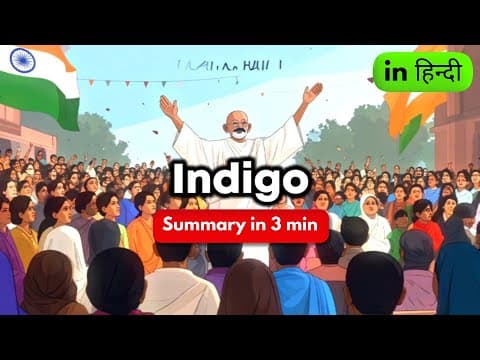
An excerpt from Louis Fischer's 'The Life of Mahatma Gandhi', the chapter portrays Gandhi in action during the 1917 Champaran movement. A poor peasant, Rajkumar Shukla, persistently follows Gandhi until he agrees to visit Champaran, where sharecroppers are forced by British planters to grow indigo on 15% of their land and surrender it as rent. When synthetic (German) indigo reduced the demand, the planters extracted illegal compensation from peasants to release them from the arrangement. Gandhi investigates, is ordered to leave but courts arrest, and the case is dropped when thousands of peasants demonstrate, the first victory of civil disobedience in India. Through a commission of inquiry, Gandhi secures a refund; he insists the planters repay 50% but finally settles for 25%, the real victory being that the peasants learned courage and shed their fear. Gandhi also arranged for schools, health and sanitation in the villages, teaching self-reliance. The lesson: freedom from fear and self-reliance are more important than mere legal or monetary gains.
Detailed Summary
Detailed Summary Video
Video coming soon
The chapter shows Gandhi's method of fighting injustice, through truth, courage, self-reliance and mass mobilisation, as he helps the indigo sharecroppers of Champaran win justice and, more importantly, lose their fear.
Shukla's persistence
The poor, illiterate peasant Rajkumar Shukla is so persistent in begging Gandhi to see the plight of Champaran's sharecroppers that he follows him everywhere for weeks. Impressed by his tenacity, Gandhi finally agrees to go, and they travel to Champaran.
The sharecropping injustice
Under the long-term contract, peasants were compelled to plant indigo on 15% of their land and hand over the harvest as rent to British landlords. When Germany developed synthetic indigo, the planters, no longer profiting from natural indigo, forced the peasants to pay compensation to be released from the agreement. Those who had already paid demanded their money back.
Civil disobedience and its first triumph
Gandhi investigates the matter, but the authorities order him to leave Champaran. He refuses and is summoned to court. Thousands of peasants demonstrate spontaneously outside the courtroom, showing the officials that Gandhi has the people's support and that their power over the peasants was challenged. The case against him is dropped, 'the beginning of their liberation from fear of the British.'
Justice and self-reliance
An official commission of inquiry, with Gandhi as its members' representative, finds for the peasants. Gandhi demands a 50% refund but agrees to 25%, because the amount mattered less than the fact that the landlords had been made to surrender part of their money and, with it, their prestige. Within years the planters' arrangement collapsed. Gandhi also brought teachers, doctors and volunteers to open schools and improve health and sanitation, teaching the villagers self-reliance rather than dependence.